business
Austin's Economic Pulse: What Rising Interest Rates Mean for Your Wallet and the City's Growth
Local investment flows are shifting as the Federal Reserve signals prolonged rate holds, reshaping everything from downtown real estate to tech hiring in the months ahead.
How we reported this
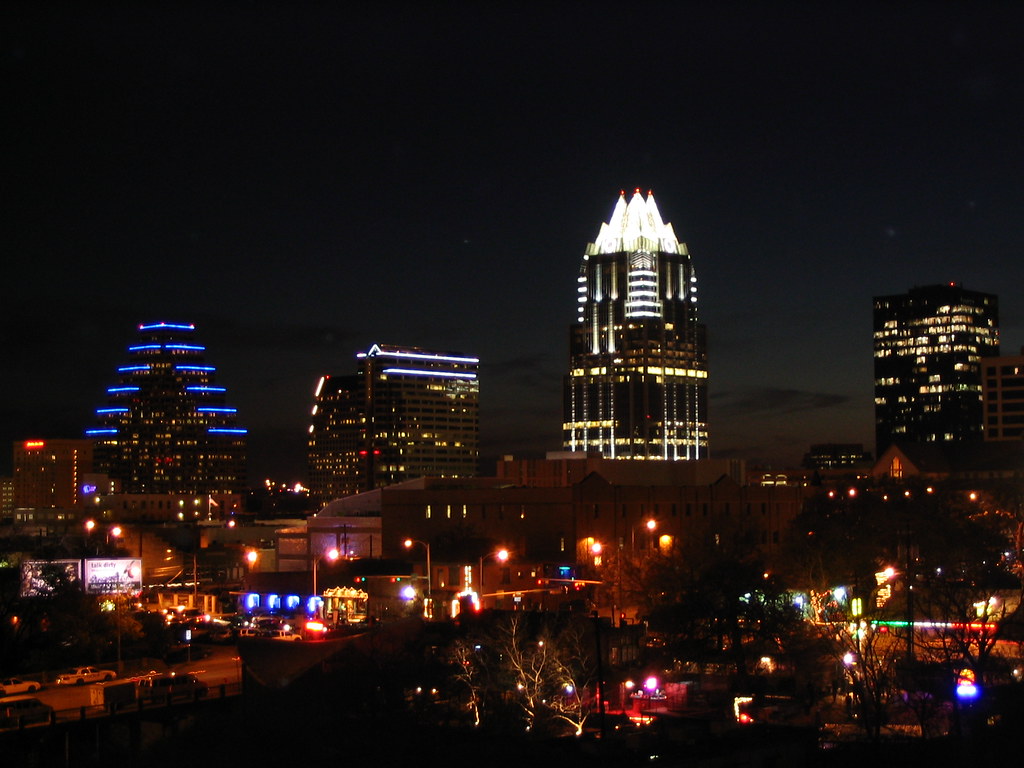
Austin's economy is hitting a crossroads. After months of aggressive hiring and real estate speculation, the city's business leaders are now grappling with a harder truth: capital is becoming more expensive, and where that money flows matters more than ever.
The Federal Reserve's decision this week to maintain interest rates at 5.25 percent-signaling no cuts until late 2026 at earliest-is already rippling through Austin's entrepreneurial ecosystem. Venture capitalists scouting deals in the Central Business District and venture offices along Lady Bird Lake are recalibrating their investment thresholds. A startup needing to raise Series A funding now faces a different calculus than it did six months ago.
This matters because Austin's economic identity depends on capturing investment dollars. The city has attracted $18.3 billion in venture capital over the past three years, according to PitchBook data released last month. That inflow powered the transformation of neighborhoods like East Austin and funded the expansion of tech campuses near Mueller. But velocity matters as much as volume. When capital gets expensive, deals slow. Hiring pauses. Real estate prices that climbed 8 percent annually begin to flatten.
Where the Money Actually Goes
Walk down Congress Avenue between the Capitol and Lady Bird Lake, and you'll see the physical evidence of this investment rotation. The Silverado office complex-a former tech incubator space now valued at $340 million-changed hands in March with financing costs nearly triple what they would have been in 2023. Across the Colorado River, venture firms concentrated around the Tesla Gigafactory in East Austin are tightening portfolio review cycles. Some operations that expanded headcount through the first half of 2026 have frozen hiring through September.
The Austin Chamber of Commerce reported this week that commercial lending volume dropped 12 percent quarter-over-quarter-the first decline since late 2023. That metric tracks how much banks are willing to lend to local businesses. Smaller firms, which typically lack the credit ratings of established corporations, feel this squeeze first. A restaurant operator looking to open a second location on Rainey Street, or a software company seeking expansion capital for their South Congress offices, now faces lending conditions that resemble late 2022 more than early 2026.
What Investors Are Actually Watching
Three data points are driving decisions right now: employment growth, commercial vacancy rates, and consumer spending velocity.
Austin's unemployment rate held at 3.1 percent in May, below the national average of 3.9 percent. That sounds healthy until you compare it to quarterly labor force reports from the Texas Workforce Commission. The data shows job creation in the Austin metro area has decelerated to 2.8 percent annualized growth-half the pace of 2024. Tech companies, which account for roughly 28 percent of Austin's high-wage employment, are being especially cautious. Apple, Oracle, and Tesla have all held recruiting plans flat since April.
Commercial real estate tells a similar story. Office vacancy in downtown Austin reached 16.2 percent this quarter, up from 11.8 percent a year ago. That matters because companies that can't fill spaces they're leasing are less likely to expand or hire new divisions. Several technology firms have returned subleased office blocks along Burnet Road and near the Domain mall. The glut of available square footage gives landlords less negotiating power, which affects property valuations-and therefore the collateral that backs local development loans.
For residents and business owners, the practical takeaway is straightforward: if you're planning a major capital expenditure, act soon. The mortgage market hasn't seized up-conforming loans for primary residences still move at reasonable speeds. But non-conforming loans, construction financing, and acquisition debt are all becoming costlier. A commercial lender I spoke with Tuesday at her office on 11th Street near the Palmer Events Center said she's seeing borrowers push closing timelines forward to avoid another rate adjustment that nobody expects but everyone fears.
The city's economy isn't contracting. But it's no longer charging ahead at full throttle either. Austin is learning to operate in an environment where money is scarce and skepticism is fashionable. How quickly business leaders adapt to that reality will determine whether Austin's next chapter looks like sustained growth or a painful correction.