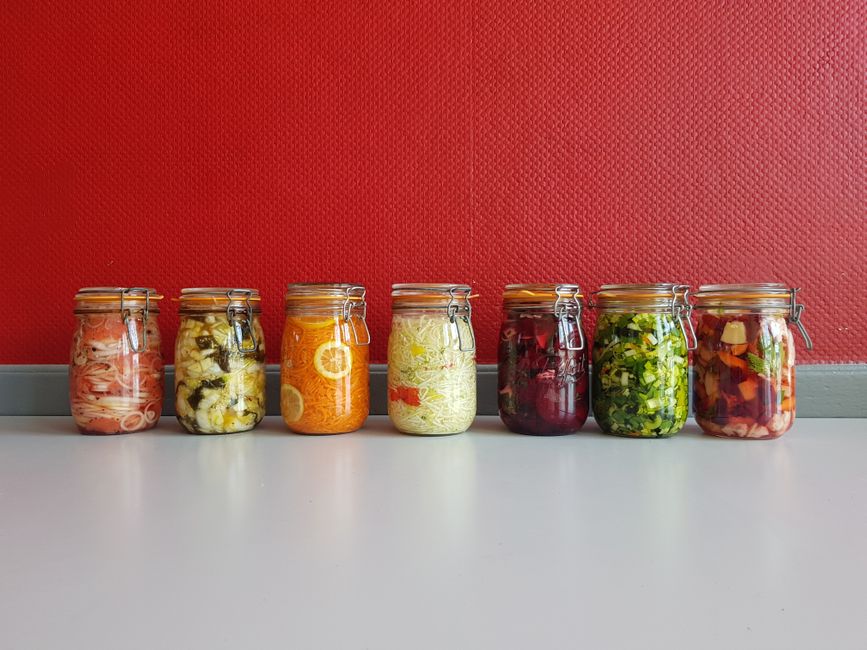
Austin's grocery shelves and farmers markets are stocking more fermented foods than at any point in the city's history, and local dietitians say demand is outpacing supply at several small producers. The trend isn't accidental. Growing clinical interest in the gut-brain axis — the communication highway linking intestinal bacteria to mood, immunity and metabolism — has pushed fermented foods from health-store curiosity to mainstream staple.
The timing matters. Americans are spending an estimated $9.3 billion annually on probiotic supplements, according to 2025 figures from the Global Wellness Institute, yet nutrition researchers increasingly argue that whole fermented foods deliver live bacterial cultures in a more bioavailable form than most capsules. The science isn't settled, but the direction of evidence is clear enough that registered dietitians across Central Texas have begun recommending specific fermented foods as a first step before any supplement purchase. Consulting a local medical professional remains the right move for anyone with specific gut complaints, but for general wellness, the food-first approach has real backing.
What Austin Producers Are Putting on Your Plate
Antonelli's Cheese Shop on 45th Street in Hyde Park stocks a rotating selection of aged raw-milk cheeses — Gouda, cheddar and alpine styles — that carry active cultures killed during pasteurisation in mass-produced versions but preserved in properly aged raw formats. The shop hosts regular tasting classes, typically priced around $45 per person, where staff walk customers through the fermentation process behind each wheel.
On the kombucha front, Austin Eastciders' neighbor in the East Sixth Street corridor, Bouldin Kombucha, has expanded its draft taproom hours through summer 2026, offering four-ounce pours starting at $4. Kombuchas vary wildly in probiotic content depending on how long fermentation runs and whether the product is pasteurised after bottling — Bouldin's unpasteurised house blends are among the better local options for live cultures. Meanwhile, at the SFC Farmers Market Downtown, held every Saturday at Republic Square Park, at least three vendors sell housemade kimchi, sauerkraut and curtido, the Salvadoran fermented cabbage slaw that's picked up a following among Austin's growing Latino wellness community.
Wheatsville Food Co-op on Guadalupe Street stocks locally produced kefir from Pure Luck Farm in Dripping Springs, roughly 30 miles southwest of the city. At $7.99 for a 32-ounce bottle, it runs about twice the price of conventional kefir — but Pure Luck ferments with whole milk and a multi-strain culture, producing a product with measurably more bacterial diversity than supermarket alternatives. Wheatsville staff began a monthly fermentation education table in the store's prepared-foods section in March 2026, free to shoppers.
Reading Labels and Making It Work at Home
Not every jar marketed as fermented actually delivers live cultures by the time it reaches your kitchen. Heat treatment, vinegar shortcuts and long distribution chains all reduce or eliminate bacterial content. The key markers to look for: "live and active cultures" on the label, refrigerated storage requirements, and — for kimchi and sauerkraut — ingredient lists that contain only vegetables, salt and spices. If vinegar appears early in the list, the product was acidified rather than fermented.
For Austinites who want to go further, the Texas Fermentation Alliance runs beginner workshops at various East Austin locations four times a year, with the next session scheduled for late September 2026. Registration typically opens six weeks out and fills within days. The $55 fee covers materials including a half-gallon mason jar starter kit.
The practical starting point is simpler than most people expect. One serving of plain yogurt with live cultures at breakfast, a small portion of sauerkraut alongside lunch, and a four-ounce glass of kefir before dinner represents a realistic daily baseline that costs well under $5 in most Austin grocery stores. Build the habit for 30 days, track how you feel, and then talk to a registered dietitian — several practice out of the CommUnityCare Health Centers network, with sliding-scale fees available — before adding anything more aggressive to the routine.