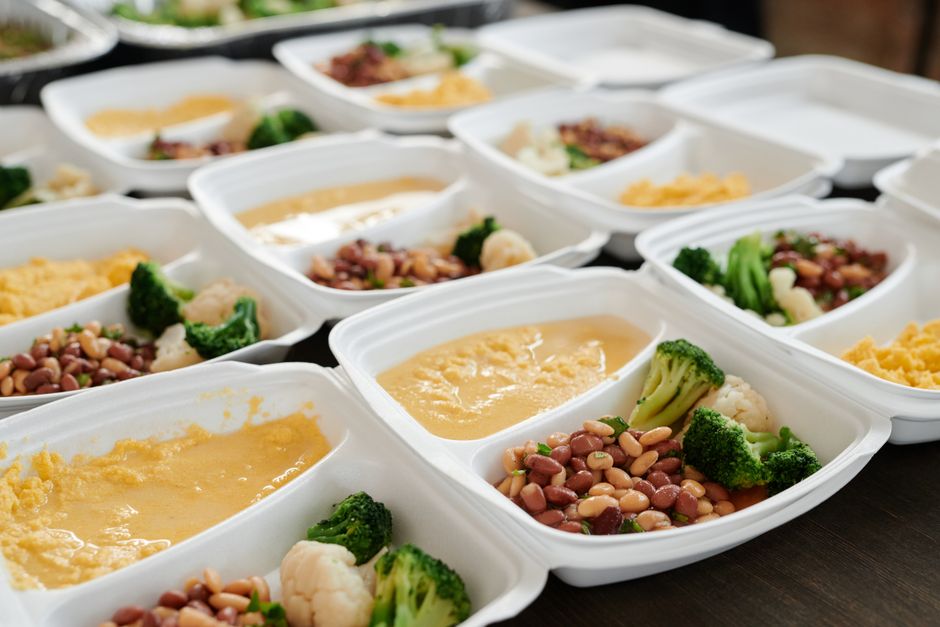
The average Austin household now spends $1,147 a month on food — roughly 14 percent more than four years ago, according to 2025 Bureau of Labor Statistics consumer expenditure data. That number stings harder when half of what you buy ends up in the trash by Thursday. Across the city, from South Congress to the Domain, a growing number of families and solo workers are responding the same way: batch cooking on weekends and treating meal prep like a second job, a productive one.
The logic is simple. Spend two to three hours on a Sunday afternoon and you eat better, cheaper, and faster Monday through Friday. The execution is where most people fall apart. Too ambitious a menu, not enough containers, a fridge that looks like a chemistry experiment by Wednesday — the failure points are predictable, which means they're fixable.
What Austin's Nutrition Community Is Actually Recommending
Central Market on North Lamar Boulevard has quietly become a hub for this shift. The store's nutrition team runs a free monthly workshop — the next one is scheduled for July 19 — focused specifically on batch cooking for households with kids. Attendees leave with a printed prep guide and a shopping list built around seasonal Texas produce. The store's bulk bins section, expanded in early 2025, lets shoppers buy exact quantities of grains, legumes, and nuts, cutting both cost and waste.
Across town, Austin-based meal planning service Thrive Prep ATX — operating out of a commercial kitchen in the East Cesar Chavez corridor — offers a six-week guided program that pairs weekly grocery lists with timed cooking sequences. Their core method is called the "anchor protein" approach: cook one large batch of a versatile protein on Sunday, typically a roasted chicken, a pot of lentils, or seasoned ground turkey, then build five different meals around it. A roasted chicken thigh becomes a taco on Monday, a grain bowl on Tuesday, and a soup by Wednesday. The program costs $89 for the six-week digital course, and a sliding-scale version is available for qualifying families through their partnership with the Any Baby Can organization in central Austin.
Registered dietitians at St. David's Medical Center on 32nd Street consistently cite the same barrier when patients talk about eating poorly: time, not knowledge. People generally know vegetables are better than drive-through. What they lack is a system that survives a Tuesday when both kids have soccer practice and a work deadline lands at 9 p.m.
The Practical Framework That Actually Holds Up
Nutritionists who work with Austin families point to four non-negotiable prep components: a cooked grain (brown rice, farro, or quinoa), a roasted vegetable mix, a protein, and a sauce or dressing made from scratch. That's it. With those four elements portioned into containers — BPA-free glass sets run about $35 at Target on Ben White Boulevard — a weeknight meal takes under ten minutes to assemble.
Freezer strategy matters just as much as the fridge. Soups, grain-based casseroles, and marinated proteins all freeze well. Families who dedicate one Sunday per month to a full freezer stock — sometimes called a "freezer dump" session in food prep communities — report spending 20 to 30 percent less on weeknight takeout, based on self-reported data from a 2024 University of Texas nutrition extension survey of 312 Austin households.
The Barton Creek Farmers Market, open Saturdays from 9 a.m. to 1 p.m. at the Barton Creek Square parking lot, is worth building a prep routine around. Buying direct from vendors like Bella Verdi Farms typically runs 15 to 20 percent cheaper per pound than comparable organic produce at grocery chains, and summer squash, peppers, and tomatoes are all in heavy supply right now.
The starting point for anyone new to meal prep should be modest: pick two dinners to prep, not five. Cook a double batch of each. See what your household actually eats by Friday before expanding the system. A nutritionist at any of Austin's community health clinics, including CommUnityCare Health Centers with locations throughout East Austin and North Loop, can help tailor a plan to specific dietary needs or budget constraints.